🗓 Launched on Dec 11, 2025
⌛105 days until next launch(210 out of 315 days, per last cycle)
💰
Offers Advice
goodAmazon Prime Day reliably discounts Motorola budget phones by 15–25%
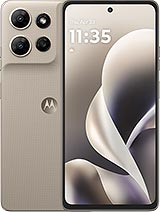
Amazon Prime Day reliably discounts Motorola budget phones by 15–25%
| Model | Price | Display | Main Camera | Key Feature |
|---|---|---|---|---|
| Moto G (2026) | 6.7" 120Hz IPS LCD | 50MP dual | ||
| Moto G Power (2026) | 6.8" 120Hz FHD+ IPS LCD | 50MP, IP68+IP69 | ||
| Moto G Stylus (2026) | 6.7" 120Hz Extreme AMOLED | 50MP + built-in stylus |
Key strengths
5,200mAh battery with 30W charging from just $199 — genuine all-day performance at a price no major competitor matches.
Motorola's close-to-stock Android experience keeps the phone fast, clean, and easy to use — no Samsung-style preloaded apps.
The G Power (2026) brings IP68+IP69 water resistance and MIL-STD-810H military-grade certification — durability specs that often cost $200+ more elsewhere.
Both models retain a 3.5mm headphone jack and microSD expansion — practical features that budget phones should never lose.
The Motorola Moto G series is the go-to lineup for budget-conscious US buyers who want reliable 5G without overspending. The Moto G (2026) delivers a 6.7-inch 120Hz display, 50MP camera, and a 5,200mAh battery on Android 16 — all for $199. The Moto G Power (2026) steps things up at $299 with 8GB RAM, IP68+IP69 water resistance, MIL-STD-810H military-grade certification, and a near full-HD display. Both run the clean near-stock Android experience Motorola is known for.
The Moto G (2026) and Moto G Power (2026) launched in December 2025 and January 2026 respectively, so you're buying the current generation. No successor has been announced yet, and at the budget tier, waiting rarely pays off. The current lineup offers solid value right now.
Both are popular US budget Android lineups. The Moto G gives you a cleaner near-stock Android experience with less bloatware and keeps the headphone jack. The Samsung Galaxy A typically offers a more polished One UI software experience and often edges ahead on display quality. If software simplicity matters, go Moto G; if ecosystem depth matters, choose Galaxy A.
Motorola commits to 2 years of major Android OS updates and 3 years of security patches for the Moto G series. This is less than Samsung Galaxy A (4 years OS) or Google Pixel A (7 years). If long-term software support is a priority, those alternatives are worth considering.
Yes for most buyers. The G Power adds IP68+IP69 water and dust resistance, MIL-STD-810H military-grade toughness, 8GB RAM (vs 4GB on the base G), and a larger FHD+ display — all for $100 more. If you want durability and more memory, the G Power is the smarter purchase.
Yes — the 2026 Moto G models retain the 3.5mm headphone jack, which is increasingly rare on modern smartphones. They also support microSD expansion for extra storage, making them among the most practically complete budget phones in the US.
The Google Pixel 10a at $499 is in a different tier — it offers a dramatically better camera experience, a faster chip, a superior OLED display, and 7 years of updates. The Moto G (2026) at $199–$299 wins purely on price. If budget is your main constraint, the Moto G is the right call; if you can stretch to $499, the Pixel 10a is a much more capable device.